

Shave Everywhere Broke the Internet
In the dawn of web videos, Philips Norelco’s campaign for a manscaping shaver took branded comedy websites and viewer engagement out a whole new door.
Below the neck. Ahead of its time.
In 2006, Philips Norelco had a razor for everywhere below the neck—and an awkward conversation to start. With live-action direction by Adam Jones, creative by Tribal DDB New York and digital development by Struck Design, ShaveEverywhere.com turned that discomfort into an interactive comedy experience.
A product people were embarrassed to discuss became a campaign they wanted to pass along
PLAY IT STRAIGHT. LET IT GET WEIRD.
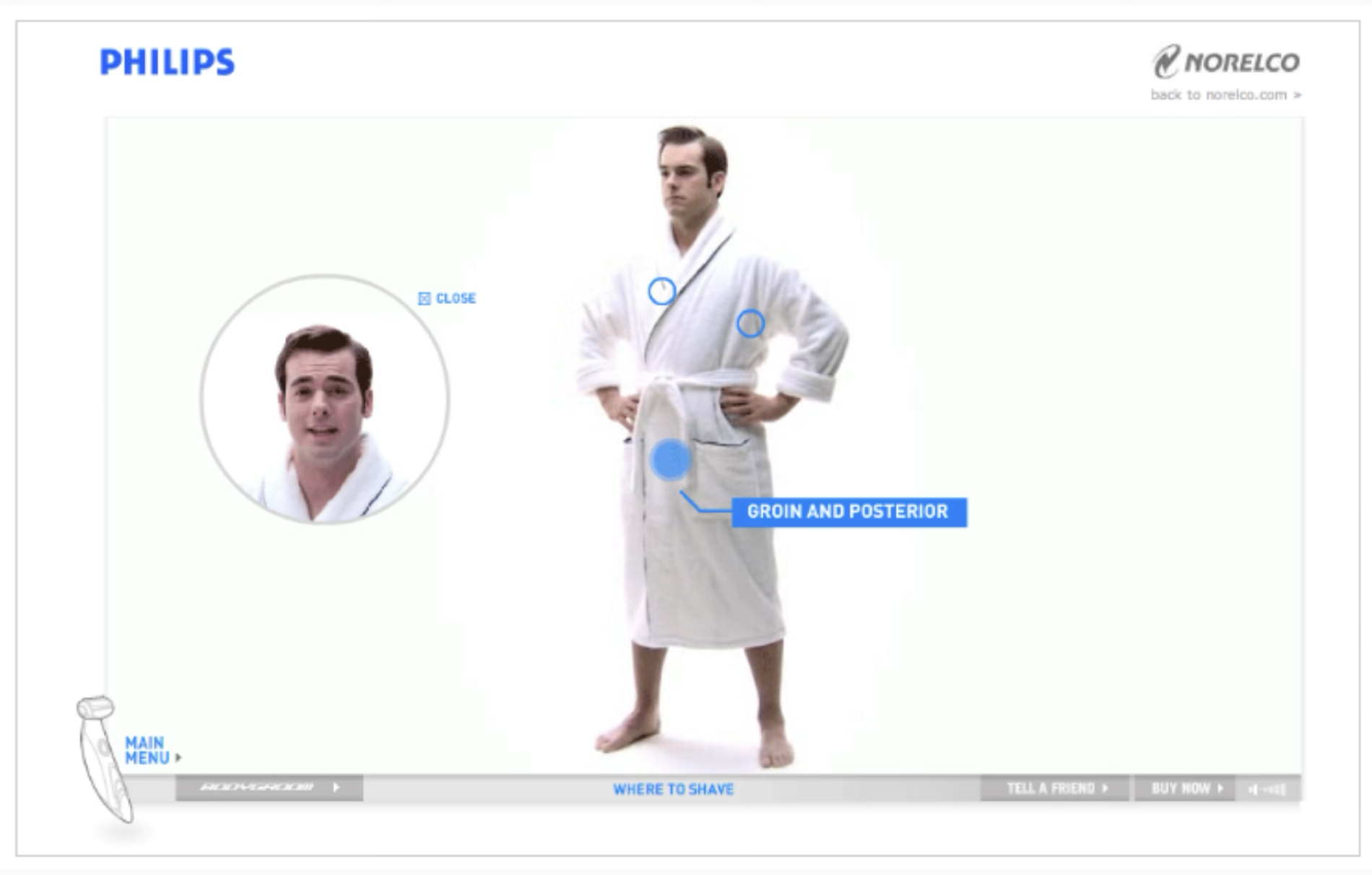
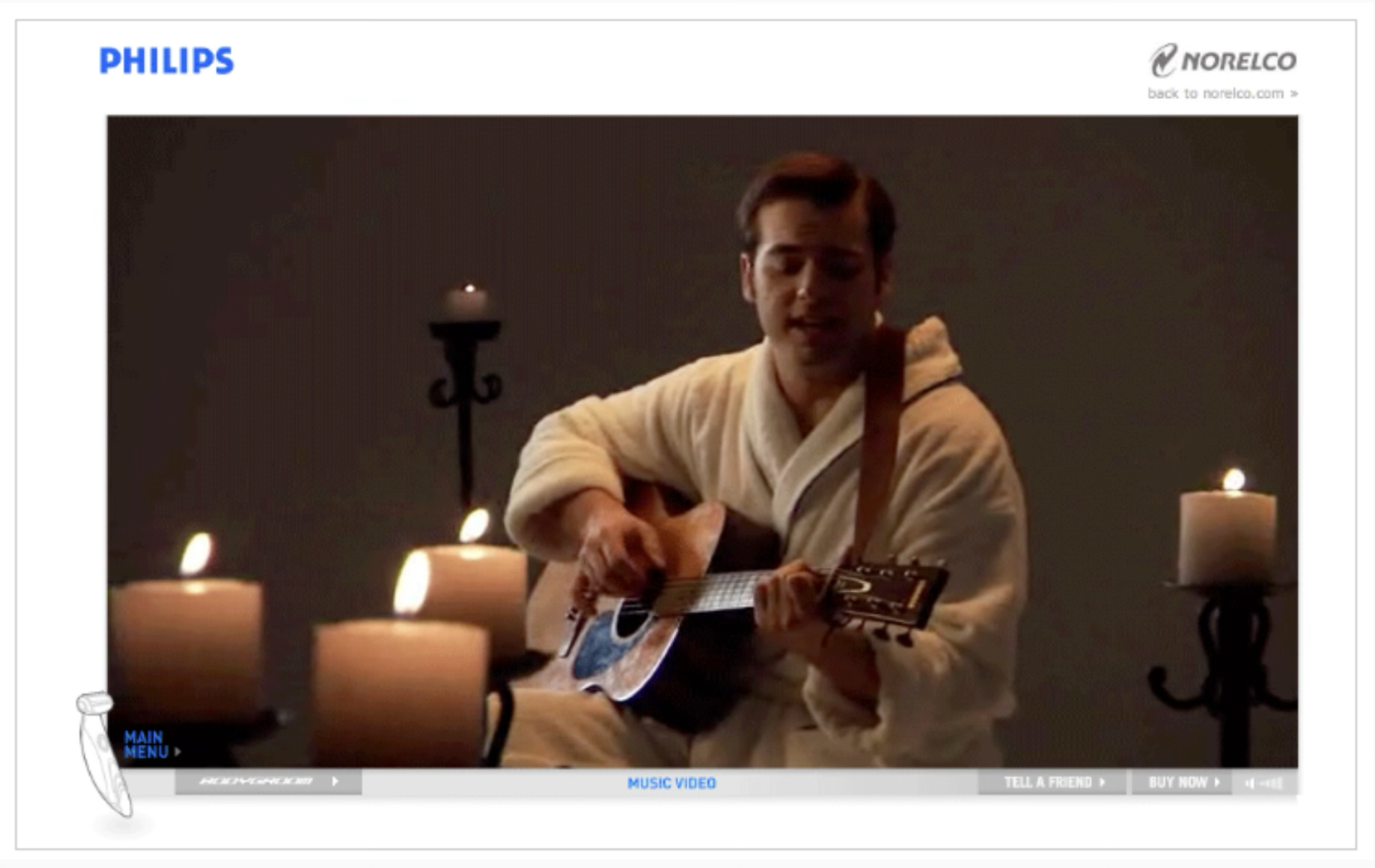
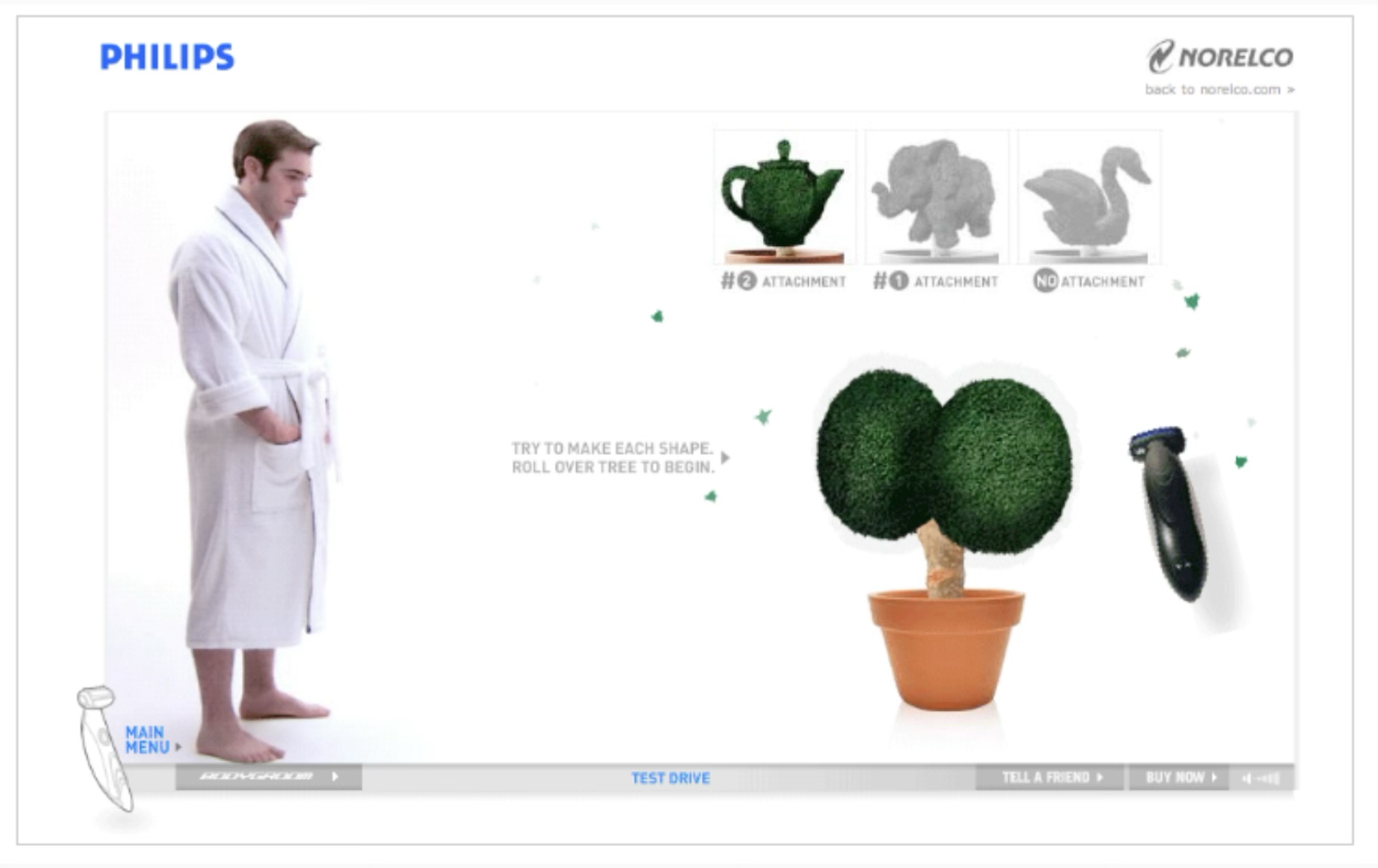
A bathrobe-wearing host, suggestive fruit and strategically placed bleeps made intimate grooming surprisingly entertaining. The directing challenge was to make outrageous material feel completely natural: conviction, not a wink at every punchline. He wasn’t telling dirty jokes. He was enthusiastically solving a problem.
The subject might have been embarrassing.
The spokesman certainly wasn’t.
That unflappable character connected product demonstrations, comic explanations and a music video into an experience visitors could explore. This wasn’t simply a commercial dropped into a website.
The performance was the experience.
– Brook Lundy
A SMALL WEBSITE. AN OUTSIZED RESPONSE.
Without an accompanying banner campaign, the site attracted more than one million visitors in its first month, with Communication Arts later documenting three million unique visits.
And people stayed. According to Advertising Age, visitors spent an average of seven and a half minutes on the site during its first six days. This was a product demonstration audiences actually wanted to spend time with. ad age2
Sales reached nearly three times initial projections, making Bodygroom Philips Norelco’s second-best-selling grooming product. MediaPost Recognition included a Cannes Gold Cyber Lion, a Gold Clio, a One Show Gold Pencil and Advertising Age’s Digital Campaign of the Year, alongside inclusion in Communication Arts’ historical timeline of creative work. Brook Lundy